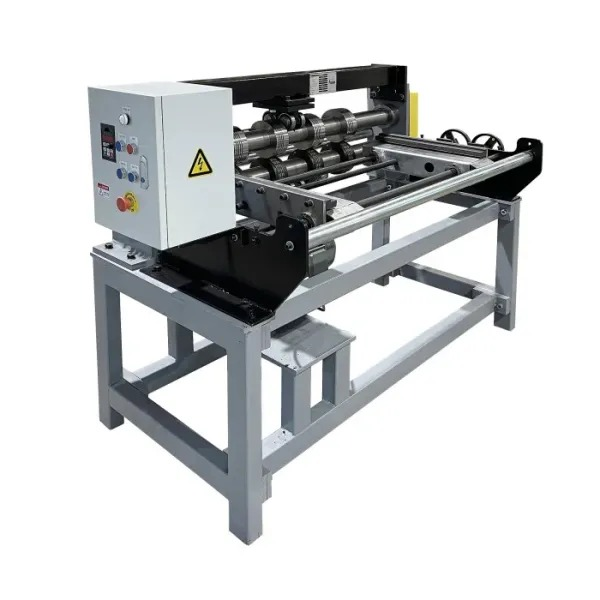
For Canadian roofing contractors, HVAC shops, siding companies and sheet metal fabricators, choosing the right roll forming machine can directly affect production capacity, labour requirements, product consistency and the ability to control project schedules.
But there is no single roll forming machine that is right for every business.
A contractor producing standing seam roofing panels has very different equipment requirements from an HVAC shop manufacturing rectangular ductwork. A company producing panels directly at construction sites may prioritize portability, while a high-volume fabrication shop may place greater importance on automation, hydraulic cutting, material handling and production speed.
That is why buying a roll forming machine in Canada should begin with the product you need to manufacture — not simply with the machine price.
This guide explains the major types of roll forming and sheet metal fabrication equipment available to Canadian businesses, including:
- roofing roll forming machines;
- standing seam machines;
- portable roof panel machines;
- siding and wall panel machines;
- multi-profile roll forming systems;
- HVAC duct fabrication equipment;
- TDF/TDC flange equipment;
- Pittsburgh lock forming machines;
- downspout machinery;
- slitters and decoilers.
It also explains the key specifications Canadian buyers should compare before purchasing equipment and why delivery, setup, training, warranty, replacement parts and long-term technical support should be considered alongside the machine itself.
KEY TAKEAWAY: The best roll forming machine is not necessarily the fastest, largest or most automated machine. It is the machine configured for your actual profile, material, production volume and workflow.
What Is a Roll Forming Machine?
A roll forming machine is equipment that continuously shapes flat sheet metal or coil into a defined profile by passing the material through a series of forming stations.
Rather than bending the metal into its final shape in one operation, each set of rollers makes a controlled part of the bend. As the material moves through successive stations, the profile is progressively formed.
A simplified workflow looks like this:
Metal coil → material feeding → progressive roll forming → profile formation → measurement → cutting → finished product
Depending on the machine and tooling, the finished product can be a standing seam roof panel, snap-lock panel, siding panel, wall panel, soffit, architectural profile or another continuously formed metal component.
The terms metal roll forming machine and sheet metal roll forming machine therefore refer to a broad family of equipment rather than one universal machine.
What materials can be roll formed?
Depending on the specific machine and tooling, roll forming equipment may process materials such as:
- galvanized steel;
- pre-painted steel;
- Galvalume;
- aluminum;
- copper;
- certain stainless steels.
Material compatibility must always be confirmed for the individual machine.
The fact that a machine can form one type or thickness of steel does not automatically mean it can safely and accurately process every other material.
Before ordering equipment, provide the supplier with the actual material specifications you intend to use, including material type, thickness or gauge, coil width and, where relevant, yield strength.
Main Types of Roll Forming Machines
The phrase roll forming machine covers many different equipment configurations.
For Canadian roofing, siding, HVAC and sheet metal businesses, the main categories can be summarized as follows:
| Equipment | Primary application | Typical user | Important selection factor |
| Standing seam roll forming machine | Standing seam roofing | Roofing contractors | Seam profile and panel width |
| Roof panel roll forming machine | Metal roofing panels | Roofers and fabricators | Required roofing profile |
| Portable roll forming machine | Shop or job-site production | Roofing contractors | Weight, power and mobility |
| Siding roll forming machine | Metal siding | Siding contractors | Siding profile and tooling |
| Board and Batten roll forming machine | Board and Batten siding | Exterior contractors | Profile dimensions |
| Wall panel machine | Architectural wall panels | Fabricators and cladding contractors | Profile and material |
| Multi-profile roll forming machine | Multiple compatible profiles | Growing fabrication businesses | Tooling interchangeability |
| HVAC duct machine | Duct components | HVAC fabrication shops | Duct system and workflow |
| TDF/TDC flange machine | Rectangular duct flanges | HVAC shops | Gauge capacity and flange type |
| Pittsburgh lockformer | Pittsburgh seams | HVAC/duct shops | Required lock profiles |
| Downspout machine | Downspouts | Gutter businesses | Finished profile and dimensions |
| Sheet metal slitter machine | Coil preparation | Sheet metal shops | Width and material capacity |
| Decoiler machine | Coil feeding | Coil-processing operations | Coil weight and width |
BUYER NOTE: Machine names can overlap. Always compare the actual finished profile, material capacity, tooling, drive system, cutting method and controls rather than relying only on the product name.
Roofing Roll Forming Machines
A roofing roll forming machine transforms metal coil into panels used in metal roofing systems.
Search terms such as roof panel machine, metal roof panel machine, metal roofing machine, roof panel roll forming machine and sheet metal roll forming machine are sometimes used interchangeably.
However, they do not necessarily describe identical equipment.
The critical question is:
What exact roofing profile does the machine produce?
A roofing contractor should identify the required panel system before comparing machines.
Important variables include:
- seam style;
- seam height;
- finished panel width;
- input coil width;
- material thickness;
- roofing material;
- rib or striation requirements;
- cutting method;
- production speed;
- panel-length controls;
- shop or mobile operation.
If you are searching for a roof panel machine for sale, compare these specifications before comparing secondary features.
Why Produce Roofing Panels In-House?
Purchasing finished roofing panels is practical for many businesses. However, contractors with sufficient project volume may benefit from bringing panel production in-house.
Potential advantages include greater control over:
Panel dimensions.
Panels can be produced according to project requirements rather than depending entirely on standard supplier dimensions.
Production scheduling.
Production can be coordinated more closely with installation.
Material inventory.
Coil can potentially be used across multiple projects or compatible products.
Job-site requirements.
Portable equipment can allow panels to be formed closer to where they will be installed.
Product range.
Depending on the equipment, interchangeable tooling can allow a business to expand into additional compatible profiles.
This does not mean every contractor should purchase a machine. Production volume, labour, storage, material handling, transportation and equipment utilization all need to be considered.
Standing Seam Roll Forming Machines
A standing seam roll forming machine is specifically configured to produce long metal roofing panels with raised seams along their edges.
Standing seam roofing is widely used in residential, commercial and architectural construction.
The raised seam provides the connection between adjacent panels, while the main panel surface remains relatively flat.
A typical standing seam machine receives coil material and progressively forms the edges required for the specified seam.
Depending on the equipment, the machine may include:
- adjustable panel widths;
- interchangeable profile tooling;
- length measurement;
- manual or powered cutting;
- hydraulic cutting;
- pre-notching;
- programmable controls;
- wireless controls;
- mobile or trailer configurations.
Standing Seam Machine vs Roof Panel Machine
These terms are related but are not exactly the same.
A roof panel machine is a broad category of equipment used to produce metal roofing panels.
A standing seam roof panel machine is a type of roof panel machine specifically configured for standing seam profiles.
In simple terms:
Every standing seam roll former is a roof panel machine, but not every roof panel machine produces standing seam roofing.
This distinction is important when searching for a standing seam machine for sale or a metal roofing machine for sale.
Always verify the exact profile rather than assuming that any roofing roll former will produce the panel your projects require.
Mechanical Standing Seam vs Snap-Lock Panels
One of the first decisions is the seam system.
Mechanical standing seam panels are designed to be mechanically seamed after installation.
Snap-lock systems use profiles designed to engage with the adjoining panel during installation.
Neither system is automatically better for every project.
The correct choice depends on factors including:
- roofing system specifications;
- building design;
- engineering requirements;
- project conditions;
- installation method;
- required seam height;
- local project requirements.
If your business installs several roofing systems, tooling flexibility becomes especially important.
IMPORTANT: Do not choose a standing seam machine simply because it produces a panel of the correct width. The seam geometry must match the roofing system you intend to install.
Portable Roll Forming Machines
For Canadian roofing contractors, production location can be almost as important as the profile itself.
Canada presents unique logistical considerations. Contractors may work across large geographic areas, and projects may be located far from major manufacturing centres.
A portable roll forming machine allows production equipment to be moved closer to the project.
Depending on its dimensions and configuration, a portable roof panel machine may operate:
- inside a fabrication shop;
- from a trailer;
- from a mobile production setup;
- near the construction site.
This can be particularly useful for contractors producing long roofing panels.
Shop Production vs Job-Site Production
| Factor | Shop production | Job-site/mobile production |
| Environment | More controlled | Depends on site conditions |
| Machine mobility | Less important | Very important |
| Finished-panel transportation | Usually required | Can be reduced |
| Panel lengths | Based on supplied measurements | Can reflect field requirements |
| Coil handling | Permanent setup possible | Must suit mobile workflow |
| Power | Shop electrical service | May require alternative power |
| Weather protection | Building provides protection | Must be planned |
| Typical user | Fabricator | Roofing contractor/mobile crew |
Neither approach is universally better.
A stationary shop can provide a predictable working environment and established material-handling workflow.
A portable standing seam machine, on the other hand, can be useful for contractors who want to manufacture panels closer to the installation location.
What to Check Before Buying a Portable Machine
When comparing a portable metal roofing machine, look beyond the word “portable.”
Check:
- machine dimensions;
- machine weight;
- power source;
- coil-loading method;
- trailer requirements;
- setup time;
- finished-panel support;
- cutting system;
- production speed;
- weather protection;
- movement between projects.
A machine is only truly portable when the entire production workflow can be moved efficiently — not simply the roll former itself.
Siding Roll Forming Machines
Roll forming is not limited to roofing.
A siding roll forming machine forms metal into profiles designed for exterior wall systems.
Depending on tooling, siding and wall panel equipment can produce profiles such as:
- Board and Batten;
- flush wall panels;
- architectural wall panels;
- soffit;
- J-channel;
- underdeck panels;
- other exterior profiles.
Businesses searching for a metal siding machine for sale should use the same selection process as roofing contractors: start with the finished profile.
Board and Batten Roll Forming Machines
Board and Batten has become an important architectural siding style.
A Board and Batten roll forming machine allows compatible metal coil to be progressively formed into the required siding profile.
For contractors already involved in metal roofing, adding siding capability can potentially expand the range of products produced in-house.
However, the machine must be correctly configured for the specific Board and Batten profile.
Panel dimensions, rib geometry, material thickness and tooling must all be considered.
Wall Panel Machines
A metal wall panel roll forming machine can be configured to produce wall and architectural cladding profiles.
The term wall panel machine covers a broad category, so buyers should identify exactly what they need.
Questions to answer include:
What does the finished panel look like?
What is the finished width?
What material will be formed?
Is the profile concealed-fastener or exposed-fastener?
Does the panel require ribs, striations or other surface features?
Will one profile be sufficient, or will the business require several panel systems?
These answers determine the required tooling and machine configuration.
Multi-Profile Roll Forming Machines
A multi profile roll forming machine is particularly interesting for businesses that expect their product range to grow.
Some roll formers can use interchangeable tooling sets, allowing one base machine to produce several compatible profiles.
For example, a business might begin with standing seam roofing and later add Board and Batten or wall panels.
This approach can reduce the need to purchase a completely separate base machine for every compatible profile.
However, “multi-profile” does not mean “universal.”
Before purchasing, ask:
Which tooling sets are compatible with this exact machine?
How long does a tooling change take?
What adjustments are required after changing tooling?
Does each profile require a different cutting system?
Is notching compatible with every tooling set?
What additional tooling can be added later?
Stan Roll Forming Machines Inc. currently supplies equipment that includes multi-profile solutions. For example, the SS4E-HD is described as a portable hydraulic multi-profile roof, wall and siding panel roll former, with PLC controls, automated length/batch functions, pre-notching and hydraulic cutting.
The current STAN RSF package also combines an SS4E-PRO portable multi-profile roll former with interchangeable roofing/siding tooling and supporting equipment for a broader production workflow.
HVAC Duct Fabrication Equipment
Roll forming technology also plays an important role in HVAC fabrication.
HVAC duct fabrication equipment can automate or simplify many steps required to turn sheet metal into rectangular or round duct components.
A complete HVAC shop may use several different machines rather than one universal HVAC duct machine.
Depending on the workflow, equipment can include:
- automatic duct production lines;
- TDF/TDC flange formers;
- Pittsburgh lock forming machines;
- cleat roll formers;
- corner insertion equipment;
- duct brakes;
- beading machines;
- seam-closing equipment;
- shears and cutting equipment.
Stan Roll Forming Machines Inc. currently supplies equipment for rectangular HVAC duct production including automatic duct lines, TDF/TDC-related machinery, Pittsburgh equipment, corner fixing equipment, air brakes and other duct-fabrication systems.
HVAC BUYER NOTE: Do not evaluate a duct fabrication machine in isolation. Map the entire process from raw sheet or coil through forming, flanging, corner installation, bending, locking and final assembly.
What Is a TDF Flange Machine?
A TDF flange machine forms an integral flange along the edge of sheet metal used for rectangular ductwork.
The flange allows duct sections to be connected during assembly.
Depending on the equipment, a TDF flange forming machine may form the flange alone or combine flange production with other functions.
For example, the TDFC Lock & Cleats Former currently listed by Stan Roll Forming Machines Inc. forms TDFC/TDF-style flanges as well as matching cleats. Its published specifications include approximately 45 FPM forming speed and an 18–26 gauge range for flange forming.
A typical workflow can include:
Prepared sheet → flange forming → corner installation → bending/folding → duct assembly
Understanding this sequence makes it easier to determine which machines are required.
TDF vs TDC Flange Machines
Canadian buyers may encounter both TDF and TDC flange machine terminology.
Both are associated with flange systems used for rectangular duct assembly, but equipment compatibility and tooling should always be verified for the duct system your shop uses.
Do not assume that every TDF machine, TDC machine or TDFC machine produces exactly the same connection.
Before purchasing, provide the supplier with:
- required flange system;
- material;
- gauge range;
- duct dimensions;
- expected production volume;
- existing equipment;
- desired level of automation.
This helps ensure that new equipment fits into the existing duct-production workflow.
Pittsburgh Lock Forming Machines
The Pittsburgh lock is another widely used connection in sheet metal duct fabrication.
A Pittsburgh lockformer progressively forms the edge required for a Pittsburgh-style joint.
Businesses searching for a Pittsburgh lock forming machine should compare:
- available lock profiles;
- material capacity;
- gauge range;
- number of forming stations;
- production speed;
- motor and electrical requirements;
- machine footprint;
- compatibility with the shop’s other duct equipment.
The Stan Roll Forming Machines Inc. HVAC catalogue currently includes Pittsburgh lock forming and seam-closing equipment as part of its rectangular duct machinery range.
Downspout Machines
Another specialized category is the downspout machine.
Downspout equipment forms sheet metal into profiles used in rainwater drainage systems.
Businesses searching for a downspout machine for sale should first determine:
- required downspout shape;
- finished dimensions;
- material;
- material thickness;
- production volume;
- required downstream equipment.
Downspout production may also require additional machinery for elbows, cutting or other components.
For this reason, evaluate the complete finished-product workflow rather than treating the roll former as an isolated purchase.
Sheet Metal Slitter Machines
A roll former can only work efficiently when material reaches it in the correct condition.
A sheet metal slitter machine is used to divide wider material into narrower strips or blanks required for subsequent production.
Slitting can become particularly important for businesses that purchase wider coils and use the material for several different products.
Instead of purchasing every coil pre-cut to one width, appropriate slitting equipment may provide greater control over material preparation.
When evaluating a slitter, consider:
- maximum material width;
- material thickness;
- number of slitting knives;
- width adjustment;
- cutting accuracy;
- coil handling;
- production speed;
- compatibility with downstream equipment.
Stan Roll Forming Machines Inc. currently lists an Industrial Gang Metal Slitter among its sheet-metal cutting equipment.
Decoiler Machines and Coil Handling
A decoiler machine supports a coil and allows material to feed into downstream equipment.
Although a decoiler may appear simple compared with the roll former, correct coil handling is essential to a safe and efficient production workflow.
A decoiler should be selected according to factors such as:
- maximum coil weight;
- coil width;
- inside diameter;
- outside diameter;
- material type;
- required feeding method;
- production speed;
- available floor space.
The objective is not simply to hold the coil. It is to create controlled material feeding into the production line.
For a roofing or siding operation, the workflow may look like:
Coil storage → decoiler → slitting/material preparation → roll former → cutting → run-out/support → finished panel
Each stage affects the next.
How to Choose the Right Roll Forming Machine
Before searching for a roll forming machine for sale, define your production requirements.
The following checklist provides a practical starting point.
1. Define the Finished Profile
Start with the product.
Do you need to produce:
- standing seam roofing?
- snap-lock panels?
- Board and Batten siding?
- wall panels?
- soffit?
- HVAC duct components?
- downspouts?
- a custom profile?
The profile determines the tooling and influences almost every other machine specification.
2. Define the Material
Provide the exact:
Material type + thickness/gauge + width + relevant mechanical properties.
Never assume that a machine advertised for “steel” will handle every steel thickness or grade.
3. Determine Required Panel Width
Some machines are designed around fixed widths, while others provide adjustable finished-panel ranges.
If your company produces several widths, confirm both the finished-panel range and corresponding input coil requirements.
4. Estimate Production Volume
A contractor producing panels several times per month has different requirements from a dedicated fabrication shop running every day.
Higher production volume may justify:
- faster drive systems;
- automated length controls;
- hydraulic cutting;
- automated notching;
- better coil handling;
- material support systems.
5. Choose Shop or Mobile Production
Determine where the machine will operate.
For shop production, consider floor space, electrical service, coil storage and permanent material handling.
For mobile production, consider dimensions, weight, power, trailer configuration and weather protection.
6. Consider Future Profiles
Do not think only about today’s work.
If you expect to add siding, another standing seam system or architectural panels, ask whether additional compatible tooling is available.
7. Evaluate Cutting and Notching
Cutting systems can range from relatively simple manual shears to automated hydraulic systems.
Notching can reduce additional preparation for certain profiles.
The correct level of automation depends on your production volume and workflow.
8. Evaluate Controls
Controls may range from simple length counters to PLC-based automation.
More automation can reduce repetitive work, but it also increases the importance of training and technical support.
9. Plan Coil Handling
The roll former is only one part of the system.
Consider how the coil will be:
stored → moved → loaded → supported → fed → processed.
10. Consider Service Before Buying
Ask who will support the machine after delivery.
This is particularly important with industrial equipment because the purchasing relationship does not end when the machine arrives.
Professional Buyer Comparison Table
Use this table when comparing several machines or quotations.
| Selection criterion | What to verify | Why it matters |
| Finished profile | Exact drawing/profile | Determines whether the machine can make your product |
| Material | Type and grade | Tooling and power requirements vary |
| Gauge/thickness | Minimum and maximum | Prevents incorrect machine selection |
| Input width | Required coil width | Determines material compatibility |
| Finished width | Fixed or adjustable | Important for project flexibility |
| Tooling | Fixed/interchangeable | Determines future profile options |
| Production speed | Realistic operating speed | Helps match required output |
| Cutting | Manual/powered/hydraulic | Affects workflow and labour |
| Notching | None/manual/automatic | Can reduce secondary operations |
| Controls | Manual/PLC/automated | Influences productivity and training |
| Power | Electrical/hydraulic/gas | Critical for shop/mobile use |
| Mobility | Stationary/portable | Determines production location |
| Coil handling | Decoiler requirements | Important for safe, stable feeding |
| Training | Availability and scope | Helps operators use equipment correctly |
| Warranty | Exact written terms | Important for long-term ownership |
| Parts | Availability and lead time | Reduces potential downtime |
| Technical support | Supplier/service contact | Critical after commissioning |
BEST PRACTICE: Send the supplier an actual profile drawing and material specification whenever possible. A drawing is far more useful than saying, “I need a roofing machine.”
Buying a Roll Forming Machine in Canada
Canadian businesses searching for a roll forming machine for sale, standing seam machine for sale, roof panel machine for sale, metal siding machine for sale or other fabrication equipment should evaluate more than the purchase price.
Industrial machinery may need to travel hundreds or thousands of kilometres before reaching the customer’s facility.
After delivery, the buyer may require:
- setup assistance;
- tooling adjustment;
- operator training;
- troubleshooting;
- warranty service;
- replacement components;
- technical support.
This makes the supplier relationship important.
A lower initial machine price does not automatically mean a lower total cost of ownership if parts, training or support are difficult to obtain.
Manufacturer vs Machinery Supplier: An Important Distinction
This distinction is particularly important when researching industrial machinery online.
A manufacturer builds the machine or its components.
A machinery supplier/dealer helps customers source appropriate equipment, select configurations, coordinate the purchase and provide a point of contact for delivery, implementation and after-sales support.
Stan Roll Forming Machines Inc. is a Canadian machinery dealer and supplier — not the manufacturer of every machine in its catalogue.
The company works with equipment manufacturers and focuses on helping Canadian customers select machinery appropriate for their profiles, materials, production goals and workflows. Stan Roll Forming Machines Inc. also provides warranty and post-warranty support.
This distinction matters because buyers should know:
Who manufactures the equipment?
Who sells and supplies it?
Who helps select the configuration?
Who provides support after purchase?
These can be different organizations.
Why Work With a Canadian Machinery Supplier?
For Canadian businesses, working with a Canadian supplier can simplify several stages of an equipment project.
Stan Roll Forming Machines Inc. is based in Manitoba and supplies equipment across Canada, including projects in Manitoba, Ontario, Alberta, British Columbia and Saskatchewan, while also supporting North American projects where applicable.
Supplier support can include:
Equipment selection — matching the machine and tooling to the required product.
Configuration assistance — determining material, profile, controls and accessories.
Delivery coordination — helping organize transportation.
Startup guidance — supporting implementation and early production.
Operator training — helping operators understand equipment and workflow.
Warranty support — providing a clear point of contact for warranty-related questions.
Post-warranty support — maintaining a relationship after the original warranty period.
Parts and technical assistance — helping customers obtain required components and resolve operational questions.
IMPORTANT: Support capabilities vary by equipment and project. Confirm the exact delivery, training, warranty and service terms for the specific machine before ordering.
Which Machine Is Right for Your Business?
A quick application-based comparison can narrow the options:
| If you need to… | Equipment to investigate |
| Produce standing seam roofing | Standing seam roll forming machine |
| Produce general metal roofing panels | Roof panel roll forming machine |
| Produce panels at different projects | Portable roll forming machine |
| Produce roofing and siding | Multi-profile roll forming machine |
| Produce Board and Batten siding | Board and Batten roll forming machine |
| Produce architectural wall panels | Metal wall panel roll forming machine |
| Manufacture rectangular HVAC duct | HVAC duct fabrication equipment |
| Form integral duct flanges | TDF/TDC flange machine |
| Produce Pittsburgh locks | Pittsburgh lock forming machine |
| Produce downspouts | Downspout machine |
| Prepare coil widths | Sheet metal slitter machine |
| Feed coil into production | Decoiler machine |
There is no universal machine that is optimal for every application.
The correct solution comes from matching equipment to the product.
Frequently Asked Questions About Roll Forming Machines in Canada
What is a roll forming machine?
A roll forming machine continuously forms sheet metal into a defined profile by passing the material through a series of forming rollers. It is commonly used for roofing, siding, wall panels and many other sheet metal products.
What is a roof panel roll forming machine?
A roof panel roll forming machine converts metal coil into continuous roofing panels. The exact panel shape depends on the tooling installed in the machine.
What is the difference between a roof panel machine and a standing seam machine?
A roof panel machine is a general category. A standing seam machine is specifically configured to produce roofing panels with raised seam profiles used in standing seam roofing systems.
What is a portable roll forming machine?
A portable roll forming machine is designed so production can be moved between a shop, trailer or job-site environment. Portability depends on the complete setup, including machine size, power source and coil handling.
Can roofing panels be produced directly at the job site?
Yes, with suitable portable equipment and an appropriate material-handling setup. Job-site production can reduce transportation of finished panels and allow production closer to installation.
What is a siding roll forming machine?
A siding roll forming machine forms metal coil into exterior siding profiles. Depending on tooling, machines may produce Board and Batten, flush wall, soffit or other architectural profiles.
What is a Board and Batten roll forming machine?
It is a roll former configured with tooling that produces a metal Board and Batten siding profile.
Can one roll forming machine make several profiles?
Some machines support interchangeable tooling and can produce multiple compatible profiles. However, not every machine can produce every profile. Compatibility must be verified for the specific machine and tooling.
What is HVAC duct fabrication equipment?
HVAC duct fabrication equipment includes machines used to cut, form, flange, bend, lock and assemble sheet metal into ventilation ductwork.
What does a TDF flange forming machine do?
A TDF flange forming machine creates an integral flange along the edge of sheet metal used in rectangular HVAC duct assembly.
What does a Pittsburgh lockformer do?
A Pittsburgh lockformer forms sheet metal edges into a Pittsburgh-style lock profile commonly used in duct fabrication.
What does a decoiler machine do?
A decoiler supports a metal coil and allows material to unwind and feed into downstream production equipment such as a slitter or roll former.
What information should I provide when requesting a quote?
Provide the finished profile or drawing, material type, material thickness, required dimensions, expected production volume, preferred production location and any cutting, notching or automation requirements.
Should I buy a portable or stationary machine?
Choose based on where production takes place. A stationary machine may suit a centralized fabrication shop, while portable equipment can be useful for contractors who want production closer to project locations.
What should I check when looking for a roll forming machine for sale in Canada?
Verify the exact profile, material capacity, panel dimensions, tooling, cutting system, power requirements, controls, production speed, training, warranty, parts availability and technical support.
Is Stan Roll Forming Machines Inc. a manufacturer?
No. Stan Roll Forming Machines Inc. is a Canadian dealer and machinery supplier. The company partners with equipment manufacturers and helps customers select, purchase and implement sheet metal forming equipment.
What equipment does Stan Roll Forming Machines Inc. supply?
The current catalogue includes roll forming machinery for roofing and siding, HVAC square ductwork equipment, decoilers, ribbed and corrugated profile roll formers, downspout and gutter machinery, lockforming equipment, metal cutting and shearing equipment, metal spinning equipment, roller bending machinery and other specialized sheet metal equipment.
Does Stan Roll Forming Machines Inc. supply equipment across Canada?
Yes. The company states that it supplies equipment across Canada and supports projects throughout North America where applicable.
Choosing Roll Forming Equipment for Long-Term Growth
A roll forming machine should not be selected only for the next project.
For many businesses, industrial equipment is a long-term investment that becomes part of the company’s production strategy.
Before purchasing, consider where your business may be in several years.
Will you add another roofing profile?
Will you expand from roofing into siding?
Will you move more production in-house?
Will you need higher automation?
Will your production remain shop-based, or could mobile production become important?
Will additional tooling allow the original machine to support future products?
Thinking about these questions early can prevent a machine that fits today’s workload from becoming unnecessarily restrictive as the business grows.
At the same time, avoid purchasing complexity that your current production does not require. More automation is useful only when it solves a real production problem.
The goal is not to buy the most complicated machine.
The goal is to build the right production system.
Final Takeaway: Start With the Product, Then Choose the Machine
Whether you are researching a metal roofing machine for sale, standing seam machine, portable roof panel machine, metal siding machine, HVAC duct machine, TDF flange machine, Pittsburgh lockformer, downspout machine, sheet metal slitter machine or decoiler machine, the selection process should begin with the same question:
What exactly does your business need to produce?
From there, define:
Profile → material → dimensions → volume → production location → tooling → cutting → automation → material handling → support.
That sequence turns a broad search for a roll forming machine for sale in Canada into a defined equipment project.
Stan Roll Forming Machines Inc. is a Canadian sheet metal machinery supplier and dealer based in Manitoba, serving roofing contractors, siding companies, HVAC shops and sheet metal fabrication businesses. The company works with equipment manufacturers rather than presenting itself as the manufacturer of every machine it supplies. Its role is to help customers identify suitable equipment, configure a practical production solution and provide support after the purchase.
For a buyer, that means the conversation should not begin with:
“Which machine should I buy?”
It should begin with:
“Here is the profile we need to produce, the material we use, our expected production volume and where we plan to run the equipment. Which configuration fits that workflow?”
That is the foundation for choosing the right roll forming and sheet metal fabrication equipment for a Canadian business.