Modern refrigeration has become increasingly responsive to the way people actually use their kitchens. Temperature control, visibility, safety alerts, and operating modes can all influence convenience, yet these functions need to work together rather than exist as isolated selling points. Such development has also changed what buyers may expect from a refrigerator manufacturer, particularly as connected controls and practical user features become more common. Within this evolving field, Homa Appliances develops cooling products for international markets, with product configurations that address different household and usage requirements.
Why No-Frost Cooling Matters
Frost develops when moisture inside the cabinet freezes onto sufficiently cold surfaces. Traditional defrosting methods may require users to periodically remove accumulated ice, while no-frost systems use controlled airflow and automatic defrost processes to manage frost within the cooling system.
Temperature consistency also depends on how cold air moves through the compartment. Blocked vents, tightly packed shelves, and frequent door opening can interfere with circulation. Good storage practices therefore remain relevant even when an appliance incorporates automatic frost management.
Humidity enters the cabinet whenever the door opens, particularly in warm or humid environments. Keeping the door closed as much as practical and avoiding unnecessary door opening can reduce unnecessary fluctuations in the internal environment.
Digital Controls Have Practical Functions
Electronic displays give users more direct control over refrigeration settings than traditional mechanical controls. Touch interfaces can provide temperature adjustments and access to special operating modes without requiring physical switches inside the compartment.
Different situations may call for different settings. Super-freeze functions can be useful after a larger quantity of unfrozen food has been placed into the freezer, while holiday modes can reduce routine refrigeration activity during extended absences. These features demonstrate how control systems can respond to changing household schedules.
Child-lock functions serve another purpose by reducing unintended changes to appliance settings. Such controls can be particularly useful in homes where children may accidentally interact with the refrigerator’s display panel.
Practical Features Found In FF2-55N
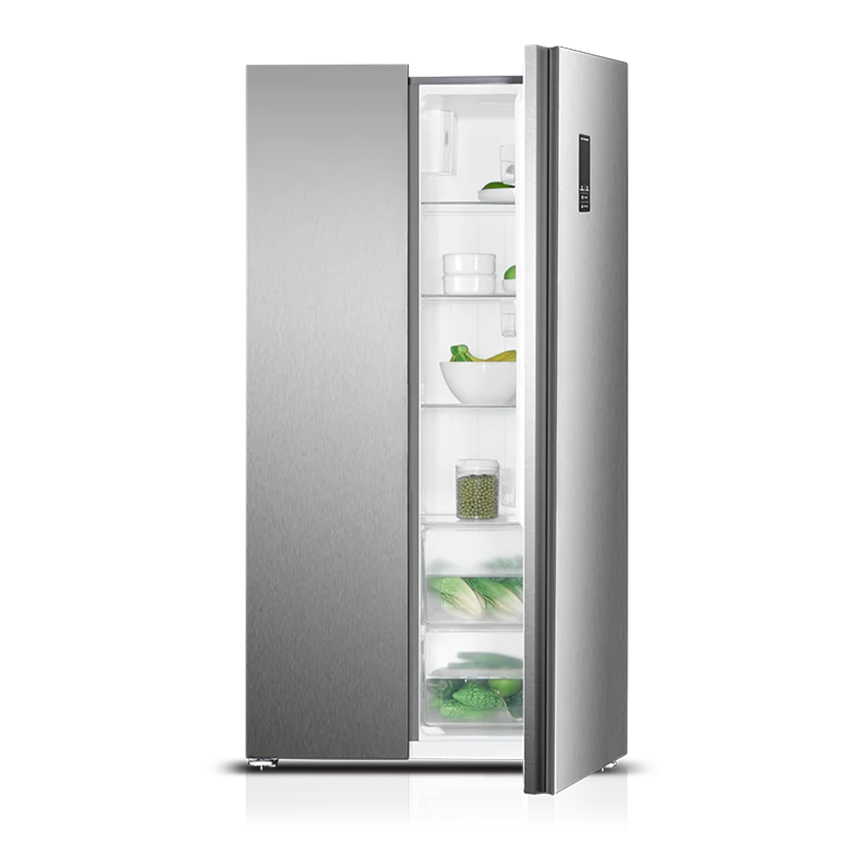
One example from the Homa portfolio is the FF2-55N, which combines total no-frost cooling with an LED touch display and Clear Sky LED lighting. Its feature set also includes Super Freeze, Holiday Mode, Child Lock, and a door-open alarm, bringing cooling management, interior visibility, and user alerts into one appliance configuration.
The door-open alarm addresses a simple but meaningful source of energy loss: leaving the refrigerator open longer than necessary. Once activated, the warning can remind users to close the door instead of relying solely on visual awareness. Such a function is especially relevant in busy kitchens where several people may use the appliance throughout the day.
Clear interior lighting serves a different need. Better visibility makes it easier to locate ingredients without repeatedly moving containers around, while an accessible touch display places key controls directly within reach. These functions illustrate how appliance design can respond to everyday interaction rather than focusing exclusively on refrigeration mechanics.
What Should Buyers Assess Beyond Feature Lists?
Feature quantity alone provides limited insight into an appliance’s usefulness. Buyers should consider whether each function addresses a genuine need, how controls are arranged, and whether operating modes are straightforward enough for regular household use.
Noise, interior organization, energy consumption, door configuration, and installation dimensions can be equally important. A refrigerator may offer sophisticated controls, yet poor storage accessibility or unsuitable cabinet proportions can make daily use inconvenient.
The intended environment should shape the decision as well. Climate conditions, household size, food-storage habits, and kitchen layout all influence which specifications deserve greater attention. A feature that matters greatly to one household may have little relevance to another.
How Manufacturers Turn Features Into Usable Design
Technology becomes valuable only when it fits the overall appliance architecture. Sensors, electronic controls, lighting systems, alarms, and cooling components must operate reliably together while remaining understandable to the person using the refrigerator. That coordination requires engineering decisions extending beyond the visible interface.
Manufacturing considerations also influence product development. Component availability, assembly processes, testing procedures, and regional market requirements can affect how particular features are implemented. International appliance production therefore involves balancing user expectations with technical and operational realities.
For brands assessing a refrigerator manufacturer, product-development capability deserves close attention alongside production capacity. Experience with different refrigerator categories and markets can help translate broad consumer preferences into practical specifications without turning every model into an overloaded collection of functions.
Conclusion
Useful refrigerator technology is not defined by the number of buttons or modes placed on the control panel. Its value becomes clearer when cooling management, visibility, safety alerts, and operating flexibility solve recognizable household problems without complicating everyday use. Careful evaluation of these details gives buyers a stronger basis for comparing refrigeration products and manufacturing capabilities. With its cooling-focused portfolio and international ODM services, Homa Appliances incorporates practical functions into different refrigeration configurations while responding to varied market requirements.