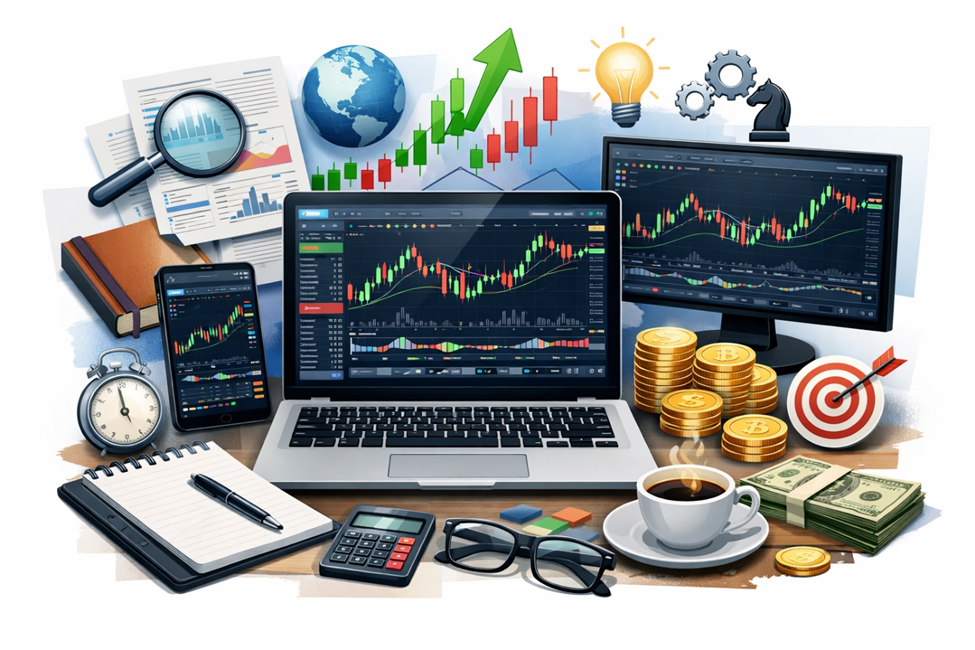
Pentium Capital Group corporate finance and asset growth strategies guide covering capital planning, funding models, valuation, and growth frameworks.
Introduction to PCG Trading Platform
The PCG Trading Platform is designed to give modern traders a flexible, fast, and data-driven environment for executing trades across multiple markets. Whether you are a beginner learning how online trading works or an experienced user looking for deeper analytical tools, understanding how to properly use the PCG Trading Platform can significantly improve your workflow and decision quality.
This complete user guide explains everything step by step — from account setup and dashboard navigation to risk controls, order types, strategy usage, and performance optimization. The goal is to help you move from basic access to confident, structured platform usage.
Online trading platforms today are more than simple buy and sell terminals. They are integrated ecosystems that include charts, indicators, alerts, automation options, portfolio tracking, and reporting tools. The PCG Trading Platform follows this modern model, combining usability with advanced capability.
By the end of this guide, you will understand how to set up, customize, operate, and optimize your trading experience effectively.
Getting Started with PCG Trading Platform
The first stage of using the PCG Trading Platform is proper onboarding. A structured start prevents mistakes later.
Create your account using accurate personal and financial details. Choose a strong password and enable two-factor authentication if available. Security should always be your first priority when using any trading system.
After account creation, complete verification steps if required. Verified accounts usually receive higher transaction limits and smoother fund processing.
Once logged in for the first time, you will typically see a default dashboard. Do not rush into trading immediately. Spend time exploring:
Dashboard layout
Menu structure
Market watchlists
Chart sections
Order entry panels
Account summary areas
Learning where everything lives reduces emotional decision-making during live trades.
Understanding the Dashboard Layout
The dashboard is your command center. Most PCG Trading Platform interfaces are divided into functional panels.
Market Watch Panel shows asset prices, percentage changes, and volume data. You can customize this list to follow only the markets you trade.
Chart Window displays price movement visually. You can change timeframe, chart style, and indicators here.
Order Panel is where you place trades. It includes buy and sell controls, order size, and order type selection.
Portfolio Panel shows your open positions, profit and loss, margin usage, and available balance.
Activity and History Panel records your completed trades, deposits, withdrawals, and system actions.
Spend time rearranging or resizing panels if the platform allows layout customization. A clean layout improves reaction time.
Market Selection and Asset Coverage
A strong feature of the PCG Trading Platform is multi-market access. Depending on configuration, users may trade:
Stocks
Indices
Currencies
Commodities
Digital assets
Derivatives
Avoid trading everything at once. Choose a focused asset group and study its behavior. Platform tools work best when paired with market familiarity.
Use filters and search tools to locate assets quickly. Add selected instruments to your watchlist for easier monitoring.
Charting Tools and Technical Indicators
Charts are the backbone of trading decisions. The PCG Trading Platform usually supports multiple chart types:
Candlestick charts
Line charts
Bar charts
Area charts
Candlestick charts are most popular because they show open, high, low, and close clearly.
Add technical indicators to improve analysis. Common tools include:
Moving averages
Relative strength index
MACD
Bollinger bands
Volume overlays
Do not overload charts with too many indicators. Too much data can reduce clarity and create conflicting signals.
Save chart templates once you create a preferred setup. This saves time and keeps your analysis consistent.
Order Types Explained
Understanding order types is critical for risk control.
Market orders execute immediately at the best available price. They are fast but may suffer slippage in volatile conditions.
Limit orders execute only at your chosen price or better. They provide price control but may not always fill.
Stop orders trigger when price reaches a defined level. They are often used for risk protection or breakout entries.
Stop-limit orders combine stop triggers with limit execution control.
Learn how each behaves before using real capital. Practice with small position sizes first.
Risk Management Controls
Risk management separates structured traders from gamblers. The PCG Trading Platform typically includes built-in controls.
Set stop loss levels on every trade. This caps downside risk automatically.
Use take profit targets to lock gains without emotional hesitation.
Monitor margin usage if leverage is enabled. High margin exposure increases liquidation risk.
Use position sizing rules. Many disciplined traders risk only a small percentage of total capital per trade.
Enable account alerts if available. Notifications help you respond quickly to fast market movement.
Deposits and Withdrawals
Funding your trading account should follow secure procedures only.
Use supported payment methods listed inside the platform. Avoid third-party middlemen claiming faster processing.
Check minimum and maximum transaction limits before initiating transfers.
Always confirm wallet or account numbers carefully. Mistakes in destination details can cause permanent loss.
Keep records of all funding transactions for accounting and tax reporting.
Mobile vs Desktop Trading
PCG Trading Platform often supports both desktop and mobile access.
Desktop versions usually provide deeper charting and multi-panel layouts. They are better for analysis and strategy building.
Mobile versions offer flexibility and monitoring on the go. They are ideal for alerts, quick adjustments, and position checks.
Avoid heavy strategy execution on small screens unless you are very experienced. Precision matters in trading.
Sync settings between devices if the platform allows cloud profiles.
Alerts and Notifications
Alerts are powerful tools for disciplined trading.
Set price alerts on key levels. This removes the need to watch charts constantly.
Use indicator alerts if supported. For example, when moving averages cross.
Enable account alerts for margin levels and order execution.
Choose push, email, or in-platform alerts based on your workflow.
Alerts reduce emotional chasing and improve planned execution.
Strategy Testing and Simulation
Before risking capital, test strategies.
Some versions of PCG Trading Platform include demo or simulation modes. Use them extensively.
Practice order placement
Test indicator combinations
Evaluate timing methods
Measure strategy consistency
Track results in a journal. Platform data plus written notes gives better performance insight.
Never skip testing. Even simple strategies behave differently across markets.
Automation and Advanced Tools
Advanced users may access automation features.
Conditional orders allow multi-rule execution.
Algorithmic modules can execute pre-defined logic.
Template strategies speed repeated trade setups.
Use automation carefully. Always test in simulation first. Automation amplifies both good and bad logic.
Performance Tracking and Reports
Performance tracking tools help long-term improvement.
Review win rate
Average profit vs loss
Drawdown levels
Holding time
Market category results
Export reports regularly. Analyze monthly performance trends.
Look for pattern mistakes — such as overtrading during specific hours.
Improvement comes from measurement, not memory.
Security Best Practices
Security must be active, not assumed.
Use strong passwords
Enable two-factor authentication
Avoid public Wi-Fi trading
Log out after sessions
Monitor login history
Never share credentials with anyone claiming support access.
Legitimate platforms never ask for passwords.
Common Beginner Mistakes
New users often repeat predictable errors.
Trading without a plan
Using maximum leverage immediately
Ignoring stop losses
Overloading charts with indicators
Chasing fast price moves
Switching strategies too often
Avoid these by using structured rules and platform tools consistently.
Building a Personal Trading Workflow
Create a repeatable workflow inside the PCG Trading Platform.
Market scan
Chart analysis
Level marking
Risk calculation
Order placement
Review and logging
Consistency beats intensity. A repeatable process reduces emotional trading.
Continuous Learning and Platform Updates
Trading platforms evolve. Features change and tools improve.
Check update logs regularly.
Learn new tools gradually.
Avoid switching workflows every update. Integrate improvements slowly.
Continuous learning compounds results over time.
Final Thoughts
The PCG Trading Platform can be a powerful environment when used with structure, discipline, and proper tool understanding. Success does not come from clicking buy or sell randomly. It comes from preparation, risk control, strategy testing, and consistent review.
Take time to master the dashboard, understand order behavior, configure alerts, and track performance. Use demo features when available and scale slowly into larger positions.
A well-used platform becomes a decision support system — not just a trading screen.
The more methodical your usage, the more value you extract from the PCG Trading Platform.